
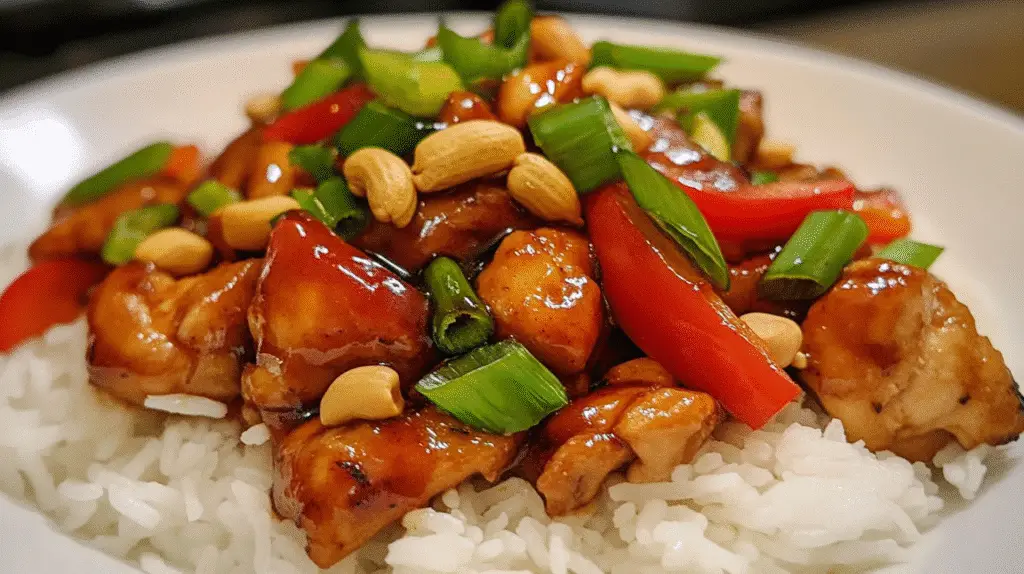
Kung Pao Chicken Recipe: Authentic Sichuan Flavor with Easy Stir-Fry Steps
🥢 Introduction: The Fiery Origins of Kung Pao Chicken
📜 A Glimpse into History
Kung Pao Chicken, or “Gong Bao Ji Ding” (宫保鸡丁), traces its fiery origins to Sichuan Province, China, during the late Qing Dynasty—around the late 1800s. The dish was named after Ding Baozhen, a provincial governor honored with the title “Kung Pao,” meaning “Palace Guardian.” Known for his love of bold flavors and spicy food, Ding’s go-to dish quickly became a Sichuan culinary treasure. Chefs began recreating it with diced chicken, dried red chilies, and crunchy roasted peanuts, stir-fried in a zingy, umami-rich sauce.
At first, Kung Pao Chicken stayed within family kitchens and local banquets. However, as Chinese communities migrated across the globe, so did their cuisine. By the mid-20th century, the dish had traveled to the West, especially in Chinese-American restaurants. Over time, it evolved slightly to match regional tastes—but the essence of Sichuan spice never left.
If you enjoy fusion takes on global dishes, you’ll love this vibrant Nacho Cauliflower Casserole—a modern twist with bold flavors that still feel like home.
🌍 Top 10 Places Where Kung Pao Chicken is Most Popular
Thanks to its tantalizing balance of sweet, savory, spicy, and nutty, Kung Pao Chicken has found fans across the globe. Here are the top 10 countries that crave this iconic stir-fry the most:
- 🇨🇳 China – The homeland of the original recipe
- 🇺🇸 United States – Beloved Chinese-American takeout classic
- 🇨🇦 Canada – A fusion favorite in multicultural dining scenes
- 🇬🇧 United Kingdom – A spicy star in takeaway menus
- 🇦🇺 Australia – Common in Sydney and Melbourne’s Chinatown eateries
- 🇲🇾 Malaysia – Found in hawker centers and food courts
- 🇸🇬 Singapore – Infused with local spices and chili blends
- 🇵🇭 Philippines – Popular for its sweet-spicy flavor profile
- 🇩🇪 Germany – Appearing in growing Asian-fusion food spots
- 🇰🇷 South Korea – Served in trendy Korean-Chinese bistros
🔍 Why It Remains a Takeout and Home-Cooking Favorite
Kung Pao Chicken is irresistible for good reason: it’s bold, balanced, and built for quick cooking. The stir-fry method locks in flavor while keeping ingredients tender yet crisp. Even better, it’s easy to tweak the spice level, protein, or nuts depending on what you have on hand.
Whether you’re craving authentic Sichuan heat or just need a quick, satisfying dinner, Kung Pao Chicken checks every box. With just 35 minutes from prep to plate, this classic recipe makes weeknight cooking feel like a global culinary adventure.
Print
Kung Pao Chicken Recipe: 7 Must-Know Secrets to Make It Irresistibly Good
- Total Time: 35 minutes
- Yield: 4 servings 1x
- Diet: Gluten Free
Description
Discover how to make Kung Pao Chicken with bold Sichuan flavors, an easy homemade sauce, and stir-fry tips for restaurant-quality results.
Ingredients
- 1 lb boneless, skinless chicken thighs, cut into bite-sized pieces
- 2 tablespoons soy sauce
- 2 tablespoons rice wine or sherry
- 2 teaspoons cornstarch
- 2 tablespoons sesame oil
- 1 tablespoon vegetable oil
- 6 dried red chilies
- 1 teaspoon Sichuan peppercorns (optional for authentic flavor)
- 1/2 cup unsalted roasted peanuts
- 2 scallions, chopped
- 3 tablespoons soy sauce
- 1 tablespoon rice vinegar
- 2 teaspoons sugar
- 1 tablespoon hoisin sauce
- 1/4 cup chicken broth
Instructions
- Marinate chicken in soy sauce, rice wine, and cornstarch for 15 minutes
- Stir-fry chicken in hot oil until browned
- Add chilies and peppercorns, then stir in the sauce mix
- Toss in peanuts and scallions at the end
- Serve hot over steamed rice
- Prep Time: 20 minutes
- Cook Time: 15 minutes
- Category: Lunch
- Method: Stir-fry
- Cuisine: Chinese (Sichuan)
🍳 What You’ll Need to Make Kung Pao Chicken
🍽️ Essential Kitchen Tools
To recreate the mouthwatering flavors of Kung Pao Chicken at home, it’s crucial to use the right kitchen gear. While the ingredients bring the flavor, the tools help you nail the technique—and that makes all the difference in stir-frying.
- 🥘 Wok or Large Frying Pan – A must-have for high-heat, even cooking. Woks allow you to toss ingredients quickly without overcooking.
- 🥣 Mixing Bowls – Use separate bowls to marinate chicken and prep your sauce. This keeps everything organized and ready for fast cooking.
- Measuring Cups and Spoons – A precise mix of salty, sweet, tangy, and spicy flavors depends on accurate measuring.
- 🧄 Garlic Press or Fine Grater – Fresh garlic and ginger give the dish its aromatic backbone. These tools extract maximum flavor fast.
If you’re serious about Chinese stir-fries, upgrading your equipment is worth considering. While a nonstick skillet works in a pinch, a carbon-steel wok offers unbeatable heat retention and flavor depth.
For other flavor-packed recipes that require minimal tools but deliver big on taste, check out this savory and quick Cold Miso Noodle Soup—perfect for busy weeknights.
🔥 Pantry Staples & Helpful Extras
When your pantry is ready, cooking becomes a breeze. Here’s what I always keep on hand for last-minute Kung Pao cravings:
- Soy Sauce – A mix of light and dark soy sauce adds umami and deep color.
- Cornstarch – Used in the marinade and sauce for the signature silky finish.
- Sesame Oil – Adds nuttiness and that unmistakable aroma at the end.
- Rice Vinegar – Brings balance by cutting through the rich, spicy sauce.
Optional but Handy Tools:
- Meat Tenderizer – Great for softening chicken breasts if you’re not using thighs.
- Slotted Spoon – Makes it easy to transfer chicken or peanuts without too much oil.
With just a few essentials, you’re already halfway to mastering one of the world’s most flavorful stir-fry dishes.
🧄 Ingredients for the Best Kung Pao Chicken
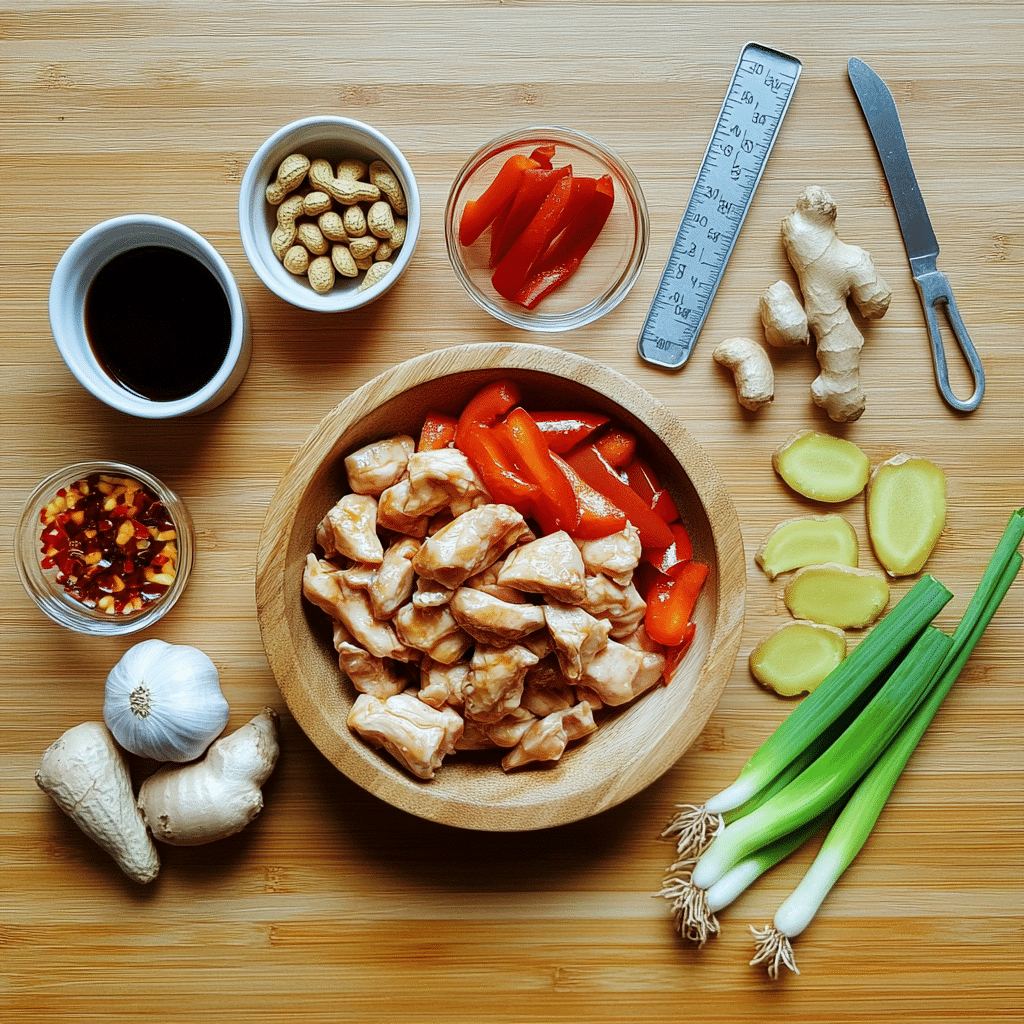
🐔 Marinate the Chicken for Juicy Results
For tender, flavorful Kung Pao Chicken, the marinade is non-negotiable. This short soak enhances texture, seals in moisture, and infuses each bite with savory depth.
Here’s what you’ll need for the chicken:
- 1 lb boneless chicken thighs or breasts, cubed (use thighs for extra juiciness; breasts for a leaner option)
- 1 tablespoon soy sauce
- 1 tablespoon Shaoxing wine (or substitute with dry sherry)
- 1 teaspoon cornstarch
Let the chicken marinate for 20–30 minutes while you prep the rest. This not only adds flavor but also gives the meat that velvet-like texture typical of Chinese restaurant stir-fry.
💡 Short on time? A quick 10-minute marinade still enhances the flavor—but aim for 30 minutes when possible for the best results.
If you enjoy balancing hearty and light ingredients in your meals, this Charred Cabbage with Cashew Cream & Lime makes a fresh, nutty side dish that pairs surprisingly well with spicy entrées.
🍜 Bold & Balanced Stir-Fry Sauce
The sauce is where the magic happens. A harmony of sweet, salty, and tangy flavors makes this sauce unforgettable—and ensures every piece of chicken is coated in glossy, spicy goodness.
- 3 tablespoons soy sauce
- 1 tablespoon dark soy sauce (adds richness and a darker hue)
- 2 tablespoons rice vinegar
- 1 tablespoon sugar
- 1 teaspoon sesame oil
- 1 tablespoon hoisin sauce
- 1 teaspoon cornstarch (to thicken the sauce and help it cling to the chicken)
Combine all the sauce ingredients in a small bowl and whisk until smooth. Set it aside for when you’re ready to stir-fry.
🌶️ Veggies, Aromatics & Crunchy Peanuts
This final set of ingredients builds layers of flavor, adds crunch, and brings visual appeal to your Kung Pao Chicken:
- 2 tablespoons vegetable oil (use a neutral oil like canola or peanut)
- 8–10 dried red chilies (adjust for heat preference)
- 1/2 cup roasted peanuts (or try cashews for a creative twist)
- 3 garlic cloves, minced
- 1-inch piece fresh ginger, minced
- 1 bell pepper, chopped (any color works)
- 1/2 cup chopped scallions (green onions)
Feel free to swap in seasonal vegetables like zucchini or snap peas for a local spin on this Chinese classic.
👨🍳 Step-by-Step Instructions for Kung Pao Chicken
🥢 1️⃣ Marinate the Chicken for Maximum Flavor
To kick things off, place your cubed chicken in a mixing bowl. Add the following:
- 1 tablespoon soy sauce
- 1 tablespoon Shaoxing wine (or dry sherry as a substitute)
- 1 teaspoon cornstarch
Mix thoroughly to coat every piece evenly. Let the chicken sit for 20 to 30 minutes. This not only tenderizes the meat but infuses it with deep umami flavor.
⏱️ Quick Tip: Use this marinating time wisely—chop your vegetables, prepare the sauce, and preheat your wok.
Want to complement this savory recipe with something sweet? Balance the heat of Kung Pao Chicken with the creamy elegance of this Swedish Princess Cake—a stunning dessert for any occasion.
🍶 2️⃣ Prepare the Sauce Before You Stir-Fry
In a separate bowl, combine these sauce ingredients:
- 3 tablespoons soy sauce
- 1 tablespoon dark soy sauce
- 2 tablespoons rice vinegar
- 1 tablespoon sugar
- 1 teaspoon sesame oil
- 1 tablespoon hoisin sauce
- 1 teaspoon cornstarch
Whisk until completely smooth. Keep this bowl close to your wok—stir-frying moves fast, and having everything prepped ensures your dish comes together seamlessly.
💡 Why it matters: Adding the sauce at the right moment prevents burning and creates that rich, glossy coating.
🔥 3️⃣ Time to Stir-Fry: Sizzle, Toss & Finish
This is where the magic happens—fast cooking, intense heat, and bold aromas. Follow these steps:
- Heat 2 tablespoons of vegetable oil in a wok over medium-high heat.
- Add 8–10 dried red chilies. Stir briefly—just enough to release flavor into the oil. Be careful not to let them burn.
- Toss in the marinated chicken. Stir-fry for 5–6 minutes until golden and cooked through.
- Add garlic, ginger, and bell peppers. Sauté for another 2–3 minutes until just tender.
- Pour in your sauce. Cook for 1–2 minutes until thickened and glossy.
- Stir in the peanuts and scallions. Mix well to coat and warm the nuts.
🥄 Low-Spice Tip: Reduce the number of dried chilies or swap them for mild chili paste to suit your heat tolerance.
🧮 Nutrition Score & Healthy Tips
🥗 Breakdown Per Serving (Approx. 4 Servings Total)
When it comes to balancing bold flavor and smart nutrition, Kung Pao Chicken delivers. Here’s a breakdown of the estimated nutrition values per serving (based on one cup with sauce and peanuts):
| Nutrient | Amount |
|---|---|
| Calories | 360 kcal |
| Protein | 28g |
| Fat | 18g |
| Carbohydrates | 22g |
| Sodium | 820mg |
This makes Kung Pao Chicken a high-protein main dish with a moderate calorie load—perfect for those trying to stay full and satisfied. It’s adaptable enough to fit into low-carb, high-protein, or even heart-healthy meal plans.
💡 Want to level up your brunch game with fusion flair? You’ll love the creative flavors of this Latin Fusion Hashbrown Tostada Benedict—a bold and satisfying recipe worth trying.
🥦 Make It Even Healthier
Simple swaps can make this already wholesome meal even better for your body—without giving up its famous fiery flavor.
- 🔄 Lower the sodium by using low-sodium soy sauce and reducing or omitting dark soy.
- 💪 Use chicken breast instead of thighs for a leaner protein choice.
- 🍯 Cut the sugar by halving it or switching to natural alternatives like monk fruit or honey.
- 🌾 Serve with whole grains such as brown rice or quinoa to increase fiber intake.
- 🥒 Bulk up the veggies with mushrooms, zucchini, or snap peas for more nutrients and texture.
These tweaks help you customize Kung Pao Chicken for your health goals—whether you’re managing sodium, watching sugar, or just adding more greens to your plate.
🍽️ Serving & Storage Tips for Kung Pao Chicken
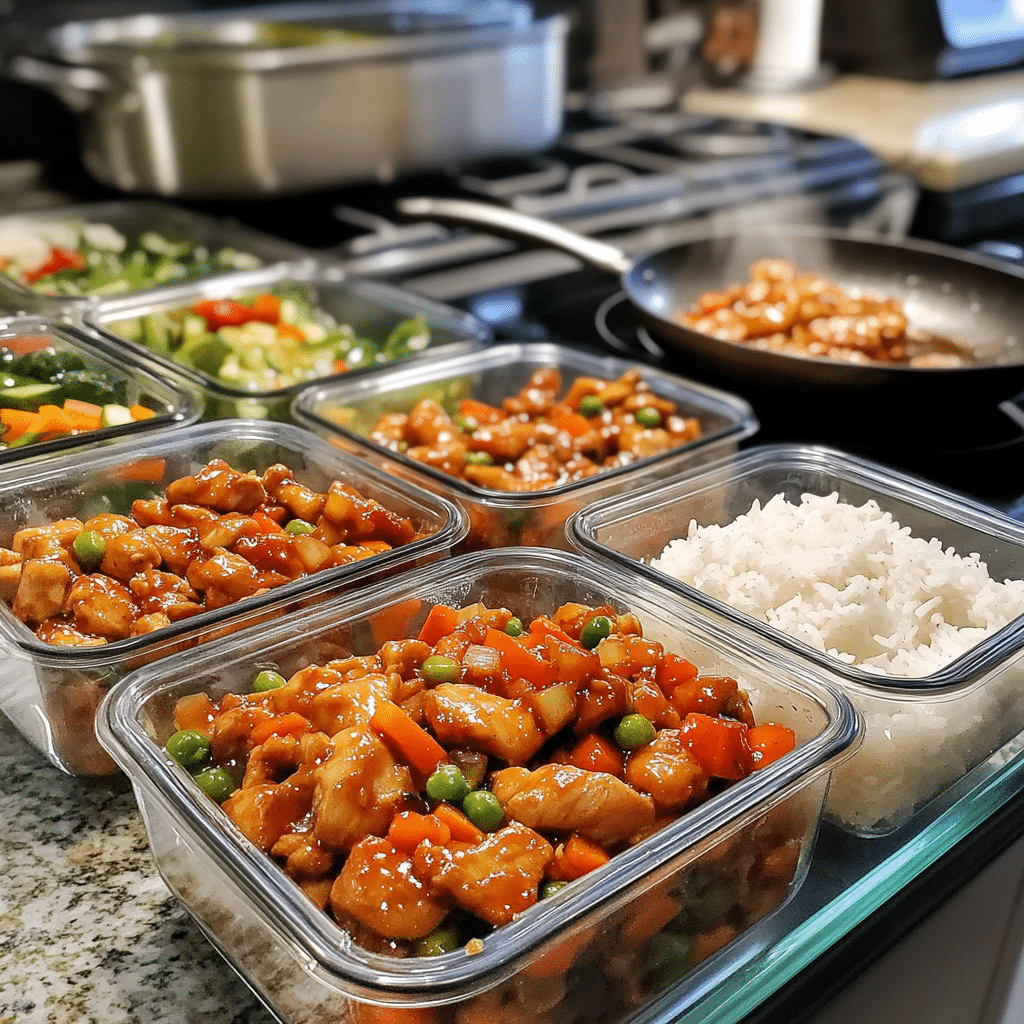
🍚 Serving Suggestions to Elevate Your Dish
Kung Pao Chicken is incredibly flexible, allowing it to star in everything from a casual meal prep lunch to a plated dinner for guests. It offers bold flavor that plays well with a variety of textures, temperatures, and side dishes.
Here are my favorite ways to serve it:
- Steamed jasmine or brown rice – Jasmine rice has a soft, slightly sticky texture that soaks up the spicy sauce beautifully. Brown rice, on the other hand, adds fiber and a hearty, nutty base for a more wholesome take.
- Garnish with scallions, sesame seeds, and chili oil – These toppings add a pop of color, texture, and heat. A quick drizzle of chili crisp oil gives extra depth for spice lovers.
- Add veggie-centric sides – Stir-fried bok choy, garlic sesame spinach, steamed broccoli, or a refreshing cucumber salad balance the heat and add nutritional value.
- Low-carb pairing ideas – Spoon the Kung Pao Chicken into lettuce cups for a crunchy wrap or serve over cauliflower rice for a satisfying low-carb option. Zucchini noodles (zoodles) also make a fantastic, saucy base.
- Make it a bowl – Build a power bowl with brown rice or quinoa, Kung Pao Chicken, avocado slices, pickled vegetables, and a lime wedge for a modern, nourishing twist.
Want to pair this dish with something sweet but not too heavy? These aromatic Cappuccino Muffins offer the perfect cozy finish to a spicy, savory meal—ideal for casual entertaining or dessert on the go.
🍱 Hosting Tip: Serve Kung Pao family-style in a large platter, and let guests help themselves buffet-style. Add rice, veggie sides, and a simple dessert to complete the spread effortlessly.
🧊 Storage Tips to Keep It Fresh
This dish stores beautifully and even improves in flavor as the sauce melds into the chicken over time. Whether you’re meal prepping or saving leftovers, follow these pro tips to keep it tasting its best:
- Refrigerate: Once cooled, transfer the Kung Pao Chicken to an airtight glass or BPA-free plastic container. Store for up to 4 days. Reheat in a skillet with a splash of water or broth to keep the sauce from drying out. The microwave works too—just cover loosely to retain moisture.
- Freeze for future meals: Kung Pao Chicken freezes well for up to 1 month. For best texture, leave the peanuts out before freezing and stir them in after reheating. Store in a freezer-safe bag or meal-prep container.
- Make it meal-prep ready: Portion the chicken into containers with cooked rice or cauliflower rice and a steamed veggie. You’ll have grab-and-go lunches or dinners ready all week.
❄️ Pro Tip: Reheat over medium heat in a wok or skillet for a quick 5-minute refresh—this brings back the wok-seared flavor and helps the sauce re-emulsify.
These tips ensure your time in the kitchen pays off long after the first meal. Whether stored in the fridge or freezer, Kung Pao Chicken keeps its bold flavor and satisfying texture intact.
🔄 Variations to Suit Every Lifestyle
Kung Pao Chicken isn’t just a delicious staple—it’s a versatile blueprint. Whether you’re vegetarian, keto-conscious, or managing dietary restrictions, you can still enjoy every bite of this flavorful stir-fry with a few clever modifications.
🥬 Vegetarian or Vegan Kung Pao Chicken
If you’re skipping meat, there’s no need to miss out on the heat, texture, or rich flavor of Kung Pao. A few plant-based swaps can deliver an equally satisfying version:
- Replace chicken with tofu or tempeh – Firm tofu holds up well in the wok. Press it first to remove moisture, then cube and pan-fry until golden and crispy. Tempeh offers a slightly nuttier flavor and more protein.
- Use vegan hoisin or mushroom-based oyster sauce – Traditional versions often contain animal products, but there are plenty of plant-based options available that keep that umami depth intact.
- Mushroom power – Add hearty mushrooms like shiitake, king oyster, or portobello to mimic the chewiness of chicken.
- Boost your greens – Incorporate broccoli, zucchini, or green beans for added fiber and nutrients.
💚 Plant-based pairings: Round out the meal with a serving of jasmine rice or brown rice, and consider a sweet vegan dessert like these classic Hello Dolly Bars—they’re a nostalgic treat that just so happens to be adaptable for dairy-free or egg-free diets.
⚖️ Low-Carb & Keto-Friendly Kung Pao
If you’re following a low-carb or ketogenic plan, Kung Pao Chicken is an excellent candidate for modification without losing its spicy, savory punch:
- Ditch the rice for cauliflower rice or spiralized zucchini noodles – Both are great at soaking up the sauce without the carbs.
- Skip the cornstarch – Use arrowroot powder or xanthan gum as a keto-friendly thickener that still gives your sauce a nice gloss.
- Reduce sugar – Cut the amount of hoisin sauce or sub in a low-carb stir-fry sauce to keep it keto.
- Use fatty cuts like chicken thighs – They offer flavor and the higher fat content keto diets embrace.
🥦 Tip: Stick to whole ingredients and make your sauce from scratch to avoid hidden sugars often found in bottled sauces.
🚫 Allergy-Friendly Modifications
Kung Pao Chicken often includes soy, nuts, and gluten, but it’s surprisingly easy to adapt for a wide range of dietary needs:
- Nut-free alternative – Replace peanuts or cashews with roasted sunflower seeds, pumpkin seeds, or even crunchy chickpeas for a safe but satisfying bite.
- Gluten-free version – Swap out regular soy sauce for tamari or coconut aminos, and double-check that your hoisin sauce is certified gluten-free.
- Soy-free solution – Coconut aminos offer a similar depth of flavor with none of the soy—and they’re also gluten-free!
🛑 Reminder: Always read labels when buying sauces and condiments to avoid hidden allergens.
With these thoughtful variations, Kung Pao Chicken becomes a customizable dish that everyone at your table can enjoy—regardless of dietary preference or restriction.
❓ Frequently Asked Questions About Kung Pao Chicken
What is the origin of Kung Pao Chicken?
Kung Pao Chicken originated during the late Qing Dynasty in Sichuan Province, China. It was named after Ding Baozhen, a government official whose title “Kung Pao” (meaning “Palace Guardian”) was posthumously honored. The dish was developed to reflect the bold, spicy, and aromatic profile of Sichuan cuisine—a style known for its liberal use of chili peppers and Sichuan peppercorns (sometimes added for an extra tingle).
Is Kung Pao Chicken healthy?
It definitely can be. When made at home, Kung Pao Chicken becomes a healthy Chinese takeout alternative. Use lean chicken breast, reduce oil, and go for low-sodium soy sauce to lower fat and sodium. Add extra veggies for fiber and volume, and you’ve got a protein-rich, nutrient-dense meal.
How do you make Kung Pao Chicken less spicy?
To dial down the heat:
Use fewer dried red chilies (or none at all)
Replace them with a mild chili paste or red bell peppers
Add a touch of honey or extra hoisin sauce to balance the spice with sweetness
This makes the dish kid-friendly or suitable for spice-sensitive eaters.
Can Kung Pao Chicken be made vegetarian or vegan?
Yes! As covered in our Variations section:
Tofu, tempeh, or mushrooms are excellent protein-rich substitutes
Use plant-based sauces like vegan hoisin and oyster sauce
The cooking technique remains the same—so you’ll still get that classic stir-fry flavor and texture
What is the main ingredient in Kung Pao Chicken?
The essential trio in traditional Kung Pao Chicken is:
Marinated chicken thighs (for tenderness)
Dried red chilies (for heat and aroma)
Roasted peanuts (for crunch)
These, combined with a tangy, spicy sauce, define the flavor profile of the dish. You can swap the protein, but these base ingredients are key to authenticity.
What do you use Kung Pao sauce for?
Kung Pao sauce is versatile and works beyond just chicken. It’s a great base for:
Tofu stir-fries
Shrimp or beef dishes
Stir-fried veggies
Noodle bowls or rice bowls
The spicy-sweet-umami combo makes it an excellent go-to stir-fry sauce for quick, flavorful meals.
What side dishes go well with Kung Pao Chicken?
To balance the bold flavors of Kung Pao Chicken, try serving it with:
Steamed jasmine rice or brown rice
Garlic sautéed spinach or bok choy
Egg drop soup
Pickled cucumbers or kimchi
These sides cool down the heat and add texture contrast to your plate.
✅ Conclusion: Make Kung Pao Chicken Your Signature Stir-Fry
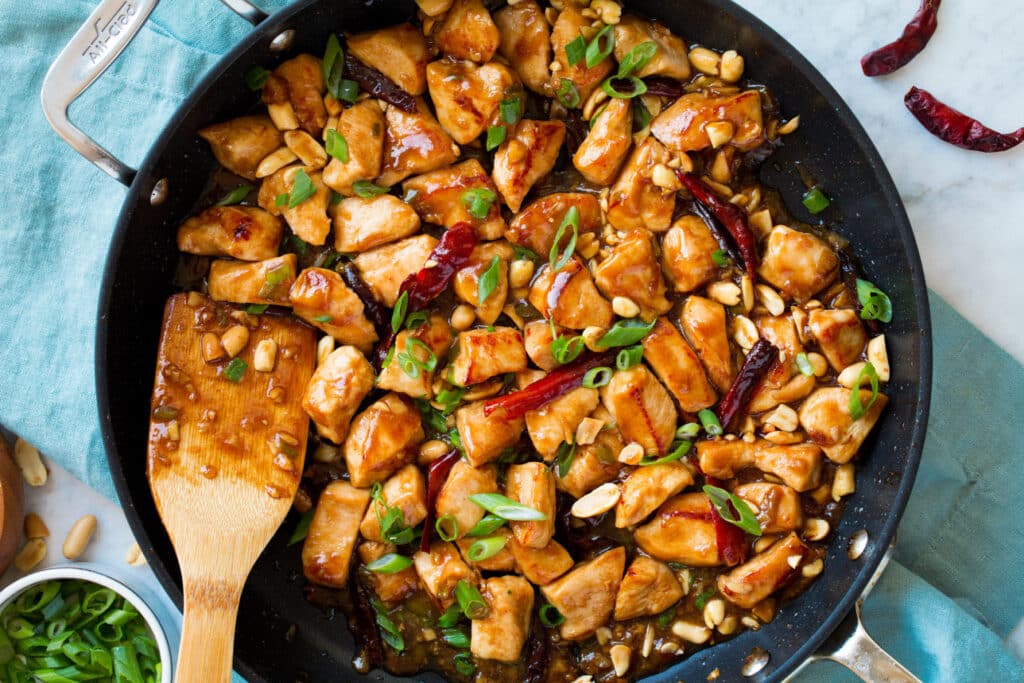
Kung Pao Chicken continues to hold its place as a global culinary icon—and for good reason. With its vibrant mix of spicy chilies, savory soy-based sauce, crunchy peanuts, and tender marinated chicken, this dish satisfies every craving. Whether you’re preparing it for a cozy night in or a casual dinner party, it never fails to impress.
But perhaps the best part? This stir-fry is incredibly adaptable. You can:
- Swap the protein—try shrimp, beef, tofu, or tempeh
- Adjust the heat—scale chilies up or down
- Toss in seasonal vegetables—think snap peas, mushrooms, zucchini, or baby corn
- Customize the sauce—lighten it, thicken it, or go low-sodium
That kind of flexibility makes Kung Pao Chicken the perfect “signature dish” to master and make your own. And unlike restaurant versions, you control every ingredient and every spice level.
🎉 Want to finish your homemade meal with something special? Treat yourself to a royal slice of this Swedish Princess Cake—a delicate, show-stopping dessert that pairs beautifully with bold Asian flavors.
With just a wok and a handful of pantry staples, you’re never far from a sizzling, flavor-packed dinner that hits every note. Kung Pao Chicken isn’t just a recipe—it’s a reliable go-to, a flavor bomb, and now, a part of your kitchen story.